Seeking Addiction Care Or Mental Health Care?
Ketamine Treatment for Post-Traumatic Stress Disorder (PTSD)
Ketamine Treatment for Post-Traumatic Stress Disorder (PTSD) at ACE Medical in Sunnyvale, CA

Living with post-traumatic stress disorder (PTSD) can feel like the trauma never ended.
Nightmares, flashbacks, constant tension, and emotional numbness can affect your work, relationships, and your sense of safety in your own body. If you live in Sunnyvale, CA or nearby communities like Mountain View, Santa Clara, or Cupertino, you may have already tried therapy and medications and still feel stuck in survival mode.
At ACE Medical, an addiction medicine practice in Sunnyvale, we care for adults who are managing PTSD—often along with depression, anxiety, or substance use. For some patients whose symptoms remain severe despite standard treatments, ketamine-based therapies may offer another path forward.
Research over the last decade suggests that ketamine can reduce PTSD symptoms and related depression and anxiety in some people, especially when combined with trauma-focused psychotherapy.[1–6]
Our goal at ACE Medical is to offer this emerging option safely, thoughtfully, and compassionately, with a strong focus on long-term healing and addiction risk.
What is PTSD, and how does it show up in everyday life?
PTSD is a condition that can develop after experiencing or witnessing a traumatic event, such as:
-Military combat
-Physical or sexual assault
-Serious accidents or injuries
-Childhood abuse or neglect
-Medical trauma or sudden loss
Common PTSD symptoms include:
-Intrusive memories or flashbacks that feel like reliving the trauma
-Nightmares and poor sleep
-Hypervigilance – always feeling “on guard” or easily startled
-Avoidance of people, places, or situations that remind you of the trauma
-Emotional numbness, detachment, or feeling “shut down”
-Irritability, anger, or risky behaviors
-Guilt, shame, or a negative view of oneself and the world
Standard, evidence-based treatments for PTSD usually include:
-Trauma-focused therapies (e.g., EMDR, cognitive processing therapy, prolonged exposure)
-Medications, such as SSRIs or SNRIs
-Sleep and nightmare-focused treatments
These help many people, but not everyone. When PTSD remains severe and disabling despite appropriate care, we sometimes call it treatment-resistant PTSD, and additional options like ketamine may be considered.[1–3]
What is ketamine treatment for PTSD?
Ketamine is a medication that has been used safely as an anesthetic for decades. At much lower doses than those used in surgery, ketamine has been shown to:
-Rapidly reduce depression and anxiety in many people with treatment-resistant conditions[4–6]
-Improve PTSD symptoms in some studies, especially when paired with psychotherapy or delivered as repeated infusions[1–3,7]
For PTSD, ketamine treatment at ACE Medical is:
-Off-label (not specifically FDA-approved for PTSD)
-Delivered at sub-anesthetic doses, so you remain awake and monitored
-Given only in our Sunnyvale medical office, never at home
-Integrated into a broader plan that can include therapy, medications, and recovery support
Many patients describe ketamine sessions as creating a “mental and emotional distance” from traumatic memories, which can make it easier to process trauma and engage in therapy.
How might ketamine help people with PTSD?
PTSD is linked to changes in brain regions involved in fear, memory, and emotional regulation, such as the amygdala, hippocampus, and prefrontal cortex. Chronic trauma can weaken connections in these networks and keep the brain in a “threat response” mode.
Ketamine appears to help by:
-Modulating glutamate, the brain’s primary excitatory neurotransmitter
-Blocking NMDA receptors and enhancing AMPA receptor activity
-Activating pathways (such as mTOR) that promote synaptogenesis, the growth and strengthening of connections between brain cells[4–6,8]
Several early studies and pilot trials suggest that ketamine can:
-Reduce overall PTSD symptom severity, including re-experiencing, avoidance, and hyperarousal[1–3]
-Rapidly improve co-occurring depression and anxiety, which often intensify PTSD distress[5–7]
-Enhance neuroplasticity, potentially making trauma-focused therapy more effective[4–6,9]
Importantly, ketamine is not a “delete button” for traumatic memories. Instead, it seems to help the brain reprocess and relate to those memories differently, often with less emotional charge.
What does the research say about ketamine for PTSD?
The science is still evolving, but several key studies and reviews provide encouraging data:
-A randomized controlled trial in chronic PTSD found that IV ketamine significantly reduced PTSD symptoms compared to placebo, with some patients experiencing a rapid and clinically meaningful response.[1]
-Follow-up work suggests that repeated ketamine infusions can sustain symptom improvements over several weeks, especially for co-occurring depression.[2,3]
-Meta-analyses and systematic reviews indicate that ketamine shows promising effects for PTSD, though more large, long-term studies are needed to establish optimal dosing, frequency, and long-term safety.[2,3,7,9]
-Early studies of ketamine-assisted psychotherapy (KAP) for trauma suggest that combining ketamine sessions with structured therapy may amplify and extend benefits, though this remains an emerging area of research.[6,9]
Because of this, at ACE Medical we are transparent that ketamine for PTSD is a hopeful but still developing option for people whose PTSD has not responded to standard treatments—not a first-line treatment or guaranteed cure.
How does ketamine fit into a long-term PTSD recovery plan?
Even when ketamine works very well, it may be coupled with other care modalities for PTSD. The best outcomes typically happen when ketamine is part of a comprehensive recovery plan, including:
-Trauma-focused therapy (EMDR, cognitive processing therapy, prolonged exposure, and others)
-Medication management for depression, anxiety, sleep, and nightmares as appropriate
-Lifestyle supports (sleep hygiene, movement, nutrition, stress management, social connection)
-Substance use treatment and recovery supports, when needed
Many patients in Sunnyvale and Santa Clara County tell us that when their symptoms ease, even somewhat, it becomes easier to stay in therapy, connect with loved ones, and do the day-to-day things that support healing.
At ACE Medical, our goal is not just a short-term drop in symptom scores. We want to help you move toward a life that feels safer, more connected, and more your own.
When should I talk to ACE Medical about ketamine for PTSD?
You might consider a consultation if:
-You have PTSD that remains severe despite appropriate therapy and medications
-Your symptoms are significantly affecting your work, relationships, or daily functioning
-You are open to an off-label treatment and want a clinic that understands both trauma and addiction
-You want care delivered in a local, medically supervised setting in Sunnyvale, CA
A consultation does not mean you are committing to ketamine. It’s a chance to:
-Share your story with a clinician who takes your trauma seriously
-Review what you’ve already tried and what hasn’t worked
-Ask questions about risks, benefits, and alternatives
-Decide, together, whether ketamine fits into your path forward
Take the First Step Toward Better Health
Whether you're seeking Ketamine treatment for depression, or other mental health or addiction challenges, let ACE Medical be your trusted partner in care.
Experience care that’s personal, proactive, and centered around you.
References:
1. Feder A, Parides MK, Murrough JW, et al. Efficacy of ketamine in chronic posttraumatic stress disorder: a randomized clinical trial.
2. Abdallah CG, Sanacora G, et al. Ketamine and PTSD: a review of clinical evidence and neurobiological mechanisms.
3. McGhee LL, et al. Ketamine infusion for treatment-resistant PTSD in veterans: clinical outcomes and follow-up.
4. Zanos P, Gould TD. Mechanisms of ketamine action as an antidepressant and implications for PTSD treatment.
5. Krystal JH, Abdallah CG, Sanacora G, et al. Ketamine and rapid-acting treatments for mood and trauma-related disorders.
6. Dore J, Turnipseed B, et al. Ketamine-assisted psychotherapy for treatment-resistant PTSD: preliminary clinical observations.
7. Liriano F, Hatten C, Schwartz TL. Ketamine as treatment for post-traumatic stress disorder: a review.
8. Alegria AA, et al. Synaptic plasticity and glutamate modulation in PTSD and the potential role of ketamine.
9. Phelps J, et al. Ketamine-assisted psychotherapy: a review of applications for trauma and PTSD.
10. U.S. FDA & Janssen. SPRAVATO (esketamine) prescribing information and safety communications related to psychiatric indications.
Access The Convenient Care You Deserve
Get In Touch
Call, click, or visit — we’re here to make getting care simple & stress-free!
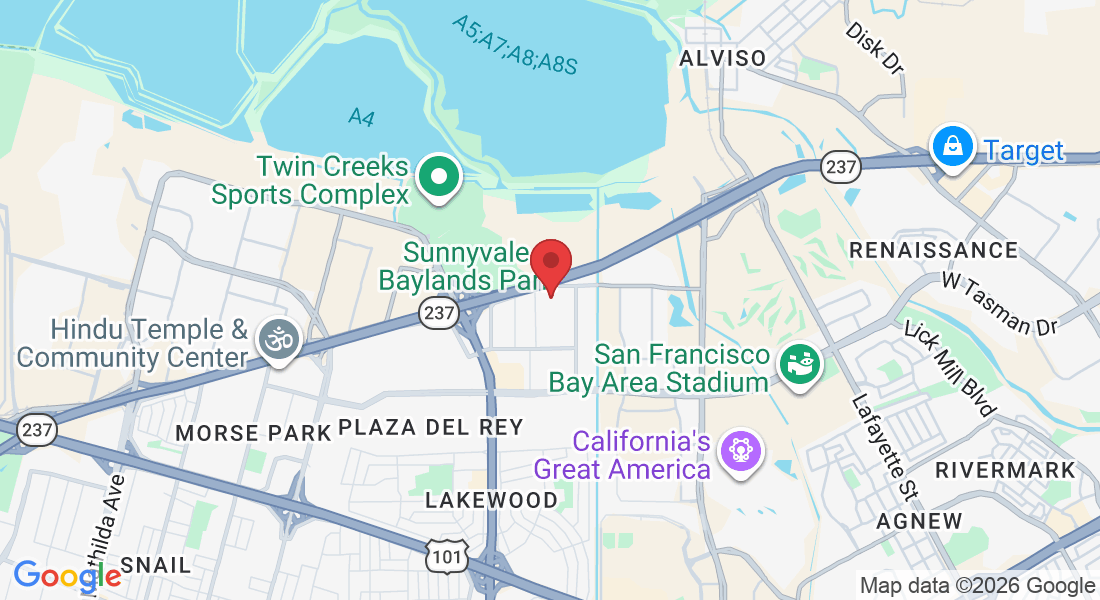
1287 Hammerwood Avenue
Sunnyvale, California 94089
Our Promise to You
Saving lives using evidence-based, ethically-delivered Ketamine Treatment and personalized Addiction Medicine. At ACE Medical, you're not just another patient. You’re a person with a story, and we’re here to support your health, your goals, and your life.
Unlock Your Brain with Ketamine and Medication for Addiction Treatment to help you break free from conditioned responses, limiting beliefs, and emotional patterns that do not empower you.
© 2026 ACE Medical | Accessibility | Terms & Conditions | Privacy Policy | Powered by DoctoGrow